0

Top Ageing Myths Busted

We are a lot which is obsessed with anti-ageing.

People are in a mad pursuit of foods, exercises, products, drugs, short-cuts and what not which can help slow down aging. But let's come to terms with the fact that however much we try (or wish) we cannot reverse the process of ageing. Yes, we can slow it down, but that too, to an extent. We at MensXP have always maintained that what really counts is ageing the graceful way.

Due to this hoopla surrounding this entire ageing/anti-ageing affair, lot of myths have cropped and are always lurking around us. While some people have a belief that hair loss comes from the mother's side, the other lot thinks that use of moisturizing products can slow down aging. So it's time to debunk some ageing myths here.

Hair Loss Comes from Mother's Side

Hair loss is dictated by several genetic factors. But the belief that the gene for the hair loss comes from the mother's side is untrue. Baldness is a hereditary trait to a large extent but you should examine the both sides of your family tree if you want to have an idea of what lies ahead for your hair.

Diet Supplements Can Slow Down Ageing

We come across many such products which claim to be the fountain of youth. Well, that's what the advertising guy has figured out for them. Scientific evidence that such products magically down ageing is lacking. And not only can these products be just “marketing gimmicks”, they might even have a negative effect on your health. So you must never just pick up these dietary supplements. It's extremely important that you take them under the supervision of a qualified doctor. And rather than popping pills, try and improve the quality of food you consume.

No Sunscreens Required in Winter

Even if the skies are cloudy, sun's UV rays pierce through them to reach the earth and then penetrate your skin. This can lead to premature ageing. True that we have to be more careful during the summer but it's also advisable to use an SPF 30 sunscreen during the winter as well and also during the days it rains.

Moisturising Products Reverse the Signs of Ageing

At present, there is no scientific proof available which suggests that moisturizing products can help you travel back in time. What these products actually do is that they make the upper layer of the epidermis look fresher, and thus, younger. Apart from this, they smooth the skin and reduce the dryness which in turn makes the lines on the skin less visible.

Losing Weight Gets Harder as you Grow up

While our metabolism may plunge as we add years, the resulting weight-loss is not necessarily associated with that. Losing weight is hugely dependent on your diet and physical routine. However, older adults might gain weight due to the sight-effects of medicines prescribed to them. In such a case, speak to your doctor at the earliest
0

Live forever!!!!


LONDON (Reuters) - If Aubrey de Grey's predictions are right, the first person who will live to see their 150th birthday has already been born. And the first person to live for 1,000 years could be less than 20 years younger.

A biomedical gerontologist and chief scientist of a foundation dedicated to longevity research, de Grey reckons that within his own lifetime doctors could have all the tools they need to "cure" ageing -- banishing diseases that come with it and extending life indefinitely.

"I'd say we have a 50/50 chance of bringing ageing under what I'd call a decisive level of medical control within the next 25 years or so," de Grey said in an interview before delivering a lecture at Britain's Royal Institution academy of science.

"And what I mean by decisive is the same sort of medical control that we have over most infectious diseases today."

De Grey sees a time when people will go to their doctors for regular "maintenance", which by then will include gene therapies, stem cell therapies, immune stimulation and a range of other advanced medical techniques to keep them in good shape.

De Grey lives near Cambridge University where he won his doctorate in 2000 and is chief scientific officer of the non-profit California-based SENS (Strategies for Engineered Negligible Senescence) Foundation, which he co-founded in 2009.

He describes ageing as the lifelong accumulation of various types of molecular and cellular damage throughout the body.

"The idea is to engage in what you might call preventative geriatrics, where you go in to periodically repair that molecular and cellular damage before it gets to the level of abundance that is pathogenic," he explained.

CHALLENGE

Exactly how far and how fast life expectancy will increase in the future is a subject of some debate, but the trend is clear. An average of three months is being added to life expectancy every year at the moment and experts estimate there could be a million centenarians across the world by 2030.

To date, the world's longest-living person on record lived to 122 and in Japan alone there were more than 44,000 centenarians in 2010.

Some researchers say, however, that the trend towards longer lifespan may falter due to an epidemic of obesity now spilling over from rich nations into the developing world.

De Grey's ideas may seem far-fetched, but $20,000 offered in 2005 by the Massachusetts Institute of Technology (MIT) Technology Review journal for any molecular biologist who showed that de Grey's SENS theory was "so wrong that it was unworthy of learned debate" was never won.

The judges on that panel were prompted into action by an angry put-down of de Grey from a group of nine leading scientists who dismissed his work as "pseudo science".

They concluded that this label was not fair, arguing instead that SENS "exists in a middle ground of yet-to-be-tested ideas that some people may find intriguing but which others are free to doubt."

CELL THERAPY
For some, the prospect of living for hundreds of years is not particularly attractive, either, as it conjures up an image of generations of sick, weak old people and societies increasingly less able to cope.

But de Grey says that's not what he's working for. Keeping the killer diseases of old age at bay is the primary focus.

"This is absolutely not a matter of keeping people alive in a bad state of health," he told Reuters. "This is about preventing people from getting sick as a result of old age. The particular therapies that we are working on will only deliver long life as a side effect of delivering better health."

De Grey divides the damage caused by ageing into seven main categories for which repair techniques need to be developed if his prediction for continual maintenance is to come true.

He notes that while for some categories, the science is still in its earliest stages, there are others where it's already almost there.

"Stem cell therapy is a big part of this. It's designed to reverse one type of damage, namely the loss of cells when cells die and are not automatically replaced, and it's already in clinical trials (in humans)," he said.

Stem cell therapies are currently being trialled in people with spinal cord injuries, and de Grey and others say they may one day be used to find ways to repair disease-damaged brains and hearts.

NO AGE LIMIT

Cardiovascular diseases are the world's biggest age-related killers and de Grey says there is a long way to go on these though researchers have figured out the path to follow.

Heart diseases that cause heart failure, heart attacks and strokes are brought about by the accumulation of certain types of what de Grey calls "molecular garbage" -- byproducts of the body's metabolic processes -- which our bodies are not able to break down or excrete.

"The garbage accumulates inside the cell, and eventually it gets in the way of the cell's workings," he said.

De Grey is working with colleagues in the United States to identify enzymes in other species that can break down the garbage and clean out the cells -- and the aim then is to devise genetic therapies to give this capability to humans.

"If we could do that in the case of certain modified forms of cholesterol which accumulate in cells of the artery wall, then we simply would not get cardiovascular disease," he said.

De Grey is reluctant to make firm predictions about how long people will be able to live in future, but he does say that with each major advance in longevity, scientists will buy more time to make yet more scientific progress.

In his view, this means that the first person who will live to 1,000 is likely to be born less than 20 years after the first person to reach 150.

"I call it longevity escape velocity -- where we have a sufficiently comprehensive panel of therapies to enable us to push back the ill health of old age faster than time is passing. And that way, we buy ourselves enough time to develop more therapies further as time goes on," he said.

"What we can actually predict in terms of how long people will live is absolutely nothing, because it will be determined by the risk of death from other causes like accidents," he said.

"But there really shouldn't be any limit imposed by how long ago you were born. The whole point of maintenance is that it works indefinitely."

0

How to Use Strong and Secure Passwords


How we can come up with string and secure passwords. Explains the methods hackers use for breaking into the accounts and also tells about a few password managers.
In all probability, most of us would be aware that using obvious or guessable passwords such as “password” or your pet's name isn't a good idea at all.
But then what options do you really have to come up with astrong and secure password?

First things first, you should have a different, fairly long and very strong password for each account. It's tempting to use the same password for all of your online accounts, but doing so puts every account in jeopardy if one of them gets hacked.

To break into accounts, hackers often employ a method called “dictionary attack”, which involves using words straight from the dictionary to guess the passwords. So it is strongly recommended that you don't use standard words as your passwords; rather try creating meaningless words from a combination of letters, numbers and symbols. And don't just replace letters in a word with a simple (e.g. 'A' with the @ symbol) because that's a very common trick. The password can be strengthened by using a blend of lower and uppercase letters.

The password should be quite complicated. But still, try and use something which you would be able to remember. Come up with something which incorporates various alphanumeric characters. Ideally, it should be a mnemonic sort of thing which you can instantly memorise. But if you see that this is not happening then spend some time in memorizing that password.
Now remembering more than one passwords can be a daunting task. This is where a password manager comes into the picture. KeePass is a fairly good, free password-management tool that runs on Windows and Mac OS X. It stores all the passwords in one encrypted database which can be accessed by a single master password.

Then there's a multi-platform password manager called LastPass which comes with the capability of auto-syncing different computers and browsers, thereby, giving you the access to your encrypted database from any device. However, the catch here is that you sacrifice the security of keeping your password list combined to a single drive. These password managers are great but not 100% safe. The best password is the one you generate yourself, which is highly complicated with a mix of upper and lower case letters, symbols and numbers. The trick lies in picking up a short phrase or a long word and get creative with it.
0

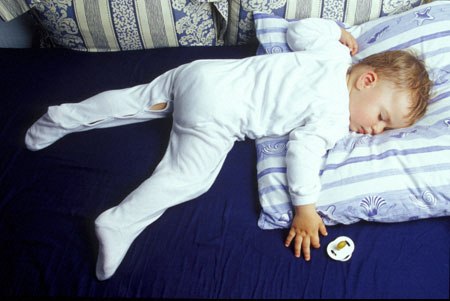
A deep and dreamy sleep

Sleep has always been a somewhat magical state with a mysterious purpose. In Hindu scripture, the world itself is considered the dream of a sleeping Vishnu.
Why do we need sleep?There is no good answer to this question, but it is an ancient biological process. Two stages of sleep, the Rapid Eye Movement (REM) stage, and the Delta-wave, or slow-wave sleep each have distinctive effects on different types of memory and decision making. Sleep is also a general healer. It promotes the rejuvenation of the immune, skeletal, muscular and nervous systems, and a healer of wounds.

Body Chemistry There is a particularly strong effect of sleep on body chemistry. The important anabolic (body-building) hormones, growth hormone, and insulin are secreted preferentially during sleep and reduced by poor sleep. Reductions in sleep duration result in prediabetic chemistry-even a single disrupted night of sleep can alter insulin response in young, healthy people. Similarly, in one's youth, up to 70% of daily growth hormone is secreted during the deepest part of sleep. With ageing, this decreases with a fall in deep sleep. If we could increase deep sleep in the elderly, we might induce a younger hormonal pattern. Exercise and meditation both increase deep sleep.

How much is enough?The amount of sleep one gets seems to correlate with longevity; seven hours is the 'sweet spot'. A lack of sleep (5 hours or less) more than doubles the risk of cardiac death while too much (8 hours or more) seems to be associated with non-cardiac death. Too little sleep seems to be a particular risk factor for weight gain, hypertension and type 2 diabetes.

Naps As India lurches towards a more Westernised life, the mid-afternoon nap may become rare. That would be a shame. A study from Greece confirms that regular napping (three times a week, 30 minutes) decreased the risk of coronary disease by 37%!

Factors that influence sleepCaffeine In the West, caffeine is one of the major culprits in the sleep disruption of modern life- even more so in recent years. Tea has far less caffeine than coffee.

Exercise Aerobic exercise that lasts for an hour will help you get to sleep and stay asleep. However, it may take up to three weeks for the full effect to be noticeable.

Alcohol Alcohol at night reduces the healing benefits of sleep. While people fall asleep faster, alcohol increases lighter REM sleep and shortens slow-wave sleep and overall sleep time. As a result, it can cause more sleepiness the next day.

Melatonin The body creates a chemical called melatonin, which may be a helpful sleeping aid in certain situations like jet lag, shift work, and general insomnia. I sometimes recommend it, particularly for post-surgical patients.

While some take melatonin nightly and tout it as an anti-ageing cure-all, I generally advise my patients to use it sparingly in specific settings until we know more about long-term effects. For jetlag, the optimal dose appears to be 5 mg, taken at bedtime in the new timezone; for insomnia, a dose less than one-tenth of that (0.3 mg).

The bottomline Folk wisdom about the healing properties of sleep is absolutely correct. Too often it is neglected by physicians in their advice to patients. With a systematic approach and some discipline, you can improve your sleep, feel better and live healthier and longer!
0

Office Tricks

*Remove all hyperlinks (weblinks) at a sigle click:
Press CONTROL + A. Once the document is selected, press CONTROL + SHIFT + F9.

*Delete Pictures in Microsoft Word
Press Ctrl + F and Replace (CTRL+H) in Microsoft Word.
Enter ^g in the “Find what” box.
Enter whatever you want to replace with in the “Replace with” box or leave blank to simply delete all the images.
Click “Replace All.”

0

Want to improve memory? Meditate, sleep

Participating in an 8-week mindfulness meditation programme appears to make measurable changes in brain regions associated with memory, sense of self, empathy and stress. In a study that will appear in the January 30 issue of Psychiatry Research: Neuroimaging, a team led by Massachusetts General Hospital (MGH) researchers report the results of their study, the first to document meditation-produced changes over time in the brain's grey matter.
"Although the practice of meditation is associated with a sense of peacefulness and physical relaxation, practitioners have long claimed that meditation also provides cognitive and psychological benefits that persist throughout the day," says Sara Lazar, PhD, of the MGH Psychiatric Neuroimaging Research Program, the study's senior author. "This study demonstrates that changes in brain structure may underlie some of these reported improvements and that people are not just feeling better because they are spending time relaxing."

Previous studies from Lazar's group and others found structural differences between the brains of experienced meditation practitioners and individuals with no history of meditation, observing thickening of the cerebral cortex in areas associated with attention and emotional integration. But those investigations could not document that those differences were actually produced by meditation.

For the current study, MR images were take of the brain structure of 16 study participants two weeks before and after they took part in the 8-week Mindfulness-Based Stress Reduction (MBSR) Program at the University of Massachusetts Center for Mindfulness. In addition to weekly meetings that included practice of mindfulness meditation - which focuses on nonjudgmental awareness of sensations, feelings and state of mind - participants received audio recordings for guided meditation practice and were asked to keep track of how much time they practiced each day. A set of MR brain images were also taken of a control group of non-meditators over a similar time interval.
Meditation group participants reported spending an average of 27 minutes each day practicing mindfulness exercises, and their responses to a mindfulness questionnaire indicated significant improvements compared with pre-participation responses. The analysis of MR images, which focused on areas where meditation-associated differences were seen in earlier studies, found increased grey-matter density in the hippocampus, known to be important for learning and memory, and in structures associated with self-awareness, compassion and introspection. Participant-reported reductions in stress also were correlated with decreased grey-matter density in the amygdala, which is known to play an important role in anxiety and stress. Although no change was seen in a self-awareness-associated structure called the insula, which had been identified in earlier studies, the authors suggest that longer-term meditation practice might be needed to produce changes in that area. None of these changes were seen in the control group, indicating that they had not resulted merely from the passage of time.

"It is fascinating to see the brain's plasticity and that, by practicing meditation, we can play an active role in changing the brain and can increase our well-being and quality of life." says Britta Hölzel, PhD, first author of the paper and a research fellow at MGH and Giessen University in Germany. "Other studies in different patient populations have shown that meditation can make significant improvements in a variety of symptoms, and we are now investigating the underlying mechanisms in the brain that facilitate this change."
Amishi Jha, PhD, a University of Miami neuroscientist who investigates mindfulness-training's effects on individuals in high-stress situations, says, "These results shed light on the mechanisms of action of mindfulness-based training. They demonstrate that the first-person experience of stress can not only be reduced with an 8-week mindfulness training programme but that this experiential change corresponds with structural changes in the amydala, a finding that opens doors to many possibilities for further research on MBSR's potential to protect against stress-related disorders, such as post-traumatic stress disorder." Jha was not one of the study investigators.

The research, led by Bjorn Rasch of the University of Basel in Switzerland, claims reactivating newly learned memories during sleep rather than when awake does a better job of strengthening the memory trace.
The work could have clinical implications for treating disorders such as post-traumatic stress disorder (PTSD).
The study involved training subjects in a spatial memory task to learn an object's location in a grid. At the same time an odour was released - the idea being to associate the memory with the smell.
One group then went to sleep, while the second group stayed awake.

After another 20 minutes, the sleeping group were woken, and both groups were given a similar task, but the objects were in different locations and without the odour.

Half an hour later they were asked to recall the position of the cards from the original task.

Rasch and colleagues found both groups were correct about 60 per cent of the time without any odour assistance.

But once the odour was added to the test, the non-sleeping group were only correct about 42 per cent of the time, compared to the sleeping group's 84 per cent.

"As we expected, reactivation during waking destabilised memories. In contrast, reactivation during SWS immediately stabilised memories, thereby directly increasing their resistance to interference," ABC Science quoted the researchers as saying.
Sweet dreams..

Source: India Syndicate based on release from Massachusetts General Hospital

0

Existence of Universe before the Big Bang

London, Nov 30 (IANS) Scientists may have uncovered evidence that the universe existed before the Big Bang.

Concentric circles discovered in cosmic microwave background radiation (CMB) - the after-effects of the Big Bang - display evidence of events that took place before most scientists believe the universe came into being.
The controversial finding points to the existence of a universe that did not begin 13.7 billion years ago, as is generally accepted, but is instead a cycle of so-called aeons.
The discovery has been posted online by Professor Roger Penrose from Oxford University and Professor Vahe Gurzadya from Yerevan State University, Armenia, the Daily Mail reports.
Most scientists believe the universe was created in the Big Bang around 13.7 billion years ago. Stars and galaxies started to form around 300 million years later.
Our sun was born around five billion years ago, while life first appeared on the earth around 3.7 billion years ago. The CMB dates to 300,000 years after the Big Bang and has now cooled to around -270 degrees Celsius.
But Penrose and Gurzadyan argue that evidence unearthed by NASA's Wilkinson Microwave Anisotophy Probe in the CMB shows imprints in the radiation that are older than the Big Bang.
They say they have discovered 12 examples of concentric circles, some of which have five rings, meaning the same object has had five massive events in its history.
They believe the circles are imprints of extremely violent gravitational radiation waves generated by supermassive black hole collisions in a previous aeon before the last big bang.
Penrose believes that his new theory means that black holes will eventually consume all the matter in the universe.